
The 2026 ICC Men’s T20 World Cup
Cricket’s fastest format returns to the subcontinent on a global stage
The 2026 ICC Men’s T20 World Cup marks the tenth edition of cricket’s most explosive international tournament. Taking place from 7 February to 8 March 2026, the event will be co‑hosted by India and Sri Lanka, two nations where cricket is not just a sport but a cultural force. A total of 20 teams will compete across 55 matches, blending the energy of packed stadiums with intense international competition.
With vast stadiums, high scoring conditions, and some of the most passionate crowds in world sport, the tournament promises a month of elite competition, global storytelling, and unforgettable moments. In a format where momentum can shift in a single over, the T20 World Cup remains one of the most unpredictable and commercially powerful events in the global sporting calendar.
Tournament locations and stadium capacities
The World Cup will be staged across a selection of iconic venues in India and Sri Lanka, chosen for scale, atmosphere, and broadcast impact:
- Narendra Modi Stadium, Ahmedabad
Capacity approximately 132,000
The largest cricket stadium in the world, purpose built for global finals and showcase matches. - Eden Gardens, Kolkata
Capacity approximately 68,000
A historic venue renowned for its intensity, noise, and dramatic night matches. - Wankhede Stadium, Mumbai
Capacity approximately 33,000
A compact high energy stadium famous for short boundaries and high scoring encounters. - Arun Jaitley Stadium, Delhi
Capacity approximately 41,000
Traditionally slower surfaces that bring spinners and tactical batting into play. - MA Chidambaram Stadium, Chennai
Capacity approximately 38,000
Spin friendly conditions and a deeply knowledgeable crowd make this a strategic battleground. - R Premadasa Stadium, Colombo
Capacity approximately 35,000
Sri Lanka’s premier cricket venue, well suited to day night matches and knockout fixtures. - Pallekele International Cricket Stadium, Kandy
Capacity approximately 35,000
A modern venue offering balanced conditions and a scenic backdrop.
Together these stadiums provide a mix of scale, intimacy, and atmosphere that elevates the World Cup experience for players, fans, and global audiences.
The teams competing
A total of 20 international teams will contest the 2026 Men’s T20 World Cup, reflecting the continued global expansion of the format. The tournament features established powers, recent finalists, and emerging nations capable of producing major upsets. Competing teams include:
- India
- Pakistan
- England
- Australia
- South Africa
- West Indies
- New Zealand
- Sri Lanka
- Bangladesh
- Afghanistan
- Netherlands
- Scotland
- Zimbabwe
- Nepal
- United Arab Emirates
- Oman
- Canada
- Italy
This diverse lineup ensures a competition where traditional dominance offers no guarantees and every group stage match carries significance.
England’s World Cup schedule
England have been drawn in Group C, and their group stage matches are scheduled as follows (all local times):
Sunday 8 February
England vs Nepal, Mumbai
Wednesday 11 February
England vs West Indies, Mumbai
England’s group stage schedule sets up two high profile clashes that could determine their progression into the Super 8s.
Previous T20 World Cup winners
Since its inception in 2007, the Men’s T20 World Cup has crowned a wide range of champions, underlining the volatility and competitiveness of the format:
- 2007 – India
- 2009 – Pakistan
- 2010 – England
- 2012 – West Indies
- 2014 – Sri Lanka
- 2016 – West Indies
- 2021 – Australia
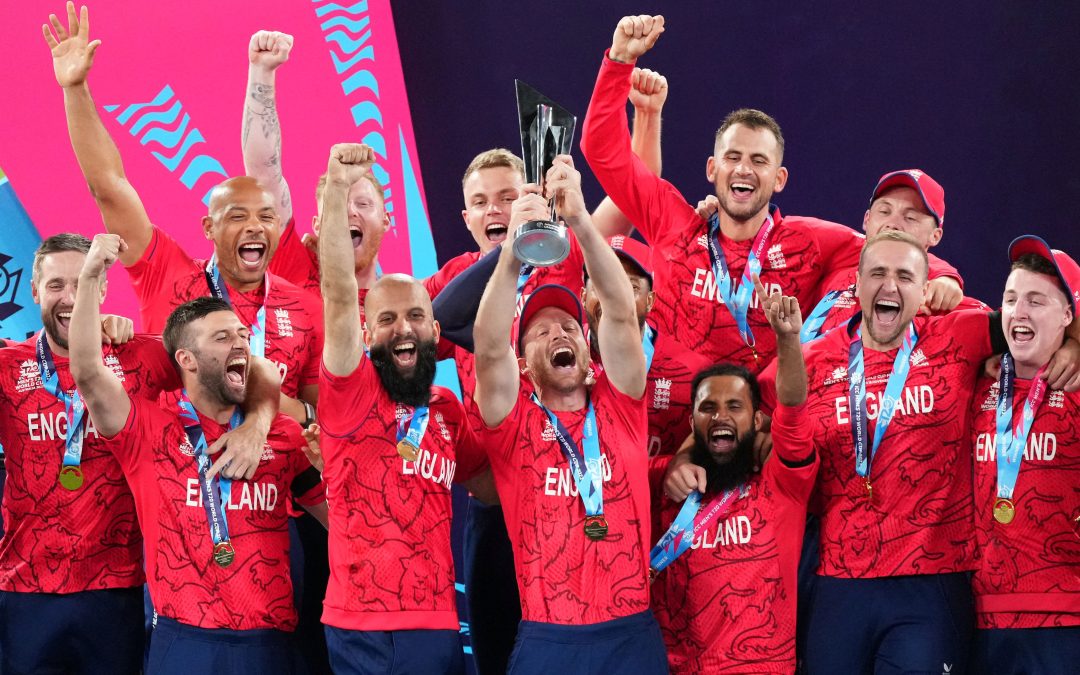
- 2022 – England
- 2024 – India
The absence of long term dominance is central to the appeal of the T20 World Cup, where preparation, adaptability, and execution on the day matter more than reputation.
Favourites and teams to watch in 2026
- India arrive as defending champions and the clear benchmark for the tournament. Home conditions, crowd support, and exceptional depth across all departments make them the team to beat.
- England continue to set tactical standards in white ball cricket, combining power, flexibility, and calm decision making under pressure.
- Australia remain perennial contenders, bringing tournament experience and a ruthless edge in knockout scenarios.
- South Africa enter with renewed belief and balance, while Pakistan retain their reputation as dangerous outsiders capable of defeating any opponent when rhythm and conditions align.
- New Zealand and West Indies both bring contrasting strengths, composure and power respectively, while Afghanistan continue to evolve into a genuine threat, particularly on spin friendly pitches.
Batters to watch in 2026
With flat surfaces and fast outfields, batting will once again play a defining role.
- Suryakumar Yadav (India)
A modern T20 innovator, capable of manipulating fields and accelerating instantly. - Jos Buttler (England)
Explosive at the top of the order and proven in World Cup environments. - Babar Azam (Pakistan)
A technically pure batter whose consistency anchors high pressure innings. - Glenn Maxwell (Australia)
A game breaker who thrives in chaos and changes momentum at will. - Nicholas Pooran (West Indies)
Fearless against both pace and spin, particularly effective on subcontinent surfaces.
Bowlers to watch in 2026
In conditions that reward variation and control, elite bowlers will be decisive.
- Jasprit Bumrah (India)
The gold standard of modern fast bowling, lethal with the new ball and at the death. - Shaheen Shah Afridi (Pakistan)
A left arm pace threat capable of early breakthroughs and match defining spells. - Adil Rashid (England)
An experienced tournament spinner whose accuracy and guile disrupt scoring rates. - Rashid Khan (Afghanistan)
One of the most influential T20 bowlers ever, combining control, wickets, and composure. - Anrich Nortje (South Africa)
Express pace and aggression that can unsettle even the best batters.
Knockout stage dates and the final
The Super 8s will lead into the knockout phase, with the semi‑finals scheduled for early March:
Semi‑Final 1 – Wednesday 4 March 2026
Semi‑Final 2 – Thursday 5 March 2026
The final is scheduled for Sunday 8 March 2026, bringing a month of elite cricket to a dramatic close, with matches expected at major venues including Ahmedabad and Colombo depending on finalists and hosting allocations.
Why the 2026 T20 World Cup matters
The ICC Men’s T20 World Cup represents cricket at its most dynamic and globally accessible. Short matches, packed schedules, and constant jeopardy make it a premium sporting product for fans, broadcasters, and commercial partners.
The 2026 edition blends tradition with scale, hosted across two cricket obsessed nations and staged in stadiums built to amplify atmosphere and spectacle. It is a tournament where heroes emerge quickly, margins are razor thin, and moments live far beyond the final ball.
From sold out nights in Ahmedabad to tactical battles under Colombo lights, the 2026 ICC Men’s T20 World Cup is set to deliver a defining chapter in modern cricket.